When Nvidia enters the room, the tone often shifts—and in the world of AI, that shift usually leads to something headline-worthy. That was the case at this year’s Nvidia GTC Paris, where the company took center stage by winning the Autonomous Driving Challenge. The event pulled in top-tier AI minds and engineering talent from across the continent, but it was Nvidia’s end-to-end AI stack and real-time inference muscle that earned the win.
This wasn’t just about showing off horsepower. It was a focused demonstration of applied machine learning under real-time constraints, and Nvidia’s win made one thing clear: they aren’t just part of the race—they’re leading it.
The Core of the Challenge
Autonomous driving might look sleek on the surface, but what goes on beneath is anything but simple. The competition revolved around handling unpredictable road scenarios using AI models running live on hardware platforms. Think of high-speed simulations, variable weather conditions, and sudden lane changes—packed into test tracks designed to confuse even the most seasoned neural network.
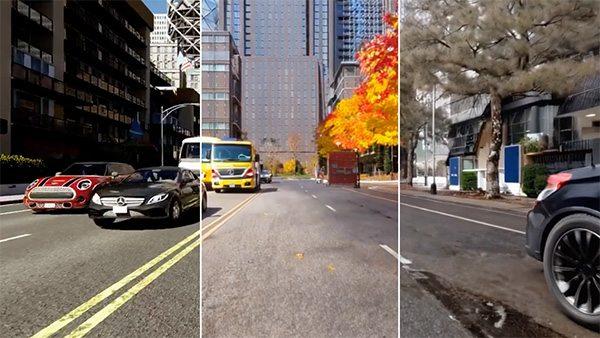
The challenge gave each team a simulated car environment powered by DRIVE Sim, where they had to integrate perception, planning, and control systems. The real pressure point? It had to happen in real time. Every millisecond mattered.
Nvidia's approach was built on their in-house DRIVE platform, combining sensor fusion, predictive path planning, and accelerated inference. While others fine-tuned their models for isolated tasks, Nvidia brought the full pipeline, clean integration, minimal latency, and high prediction accuracy. That blend is what tipped the scale.
What Made Nvidia’s Stack Stand Out
This win wasn’t simply about brute-force GPU power. It was about how efficiently their components spoke to one another. The system pulled together multiple elements, and the way they were layered was key.
1. DRIVE Orin at the Center
At the heart of the stack was DRIVE Orin, Nvidia's automotive-grade system-on-a-chip. It's not new, but the way it was utilized this time made the difference. Orin processed inputs from simulated LIDAR, camera, radar, and ultrasonic sensors simultaneously, with minimal delay. That level of synchronization is what allowed for smooth transitions even when the system was surprised by fast-changing environments.
2. Perception That Didn’t Miss
The perception module was built on top of pre-trained Vision Transformers (ViTs), which performed better than conventional CNNs during high-speed runs. What really helped was their use of sparse attention techniques, which cut down inference time without sacrificing detection quality.
3. Planning That Looked Ahead
Most systems in the challenge reacted to changes. Nvidia’s planned ahead. Their route prediction module incorporated behavioral cloning and reinforcement learning to anticipate not just the next move, but a sequence of future scenarios. That foresight allowed the system to avoid unnecessary recalculations and jerky turns.
4. Inference That Actually Held Up Under Load
While other systems began to throttle under load, Nvidia's CUDA-accelerated inference pipeline held up. It wasn’t just fast—it was consistent. Every result showed less than a 5ms deviation in latency, even under multi-scenario stress testing.
Real-Time Performance in a Multi-Agent World
Where Nvidia really pulled ahead was in multi-agent interactions. The test included scenarios where vehicles had to interpret the behavior of others, not just stay in a lane. For example, merging into fast traffic while a delivery drone was flying overhead, or reacting to a cyclist veering into the path.
Many teams stumbled here. Their models either hesitated too long or reacted too fast and overcorrected. Nvidia's system, however, used a spatiotemporal graph network to parse agent behaviors in parallel. This allowed it to assess risk profiles and adjust accordingly, without having to reprocess the entire scene.
This kind of dynamic response handling sets them apart. While others went into fallback modes or safe-state shutdowns, Nvidia kept driving smoothly. That edge wasn’t just technical—it was situational. Nvidia’s system demonstrated a capacity to make judgment calls that felt closer to human instincts than scripted responses. In one instance, the AI chose a slower merge to avoid forcing another vehicle into evasive action—something not directly rewarded in the challenge, but noticed by judges.
A Glimpse at What Comes Next
The outcome at GTC Paris wasn’t just a trophy moment. It was a live demonstration of what's possible when hardware and software are developed as part of a singular system. This tight integration enabled Nvidia’s solution to behave less like a bundle of AI tools and more like a coordinated driver.
Looking beyond the competition, this signals the direction Nvidia is steering its autonomous strategy. With DRIVE Hyperion and the upcoming iterations of Orin and Thor, the company is clearly moving toward full vehicle platforms that don’t just support autonomy—they expect it.
And if this challenge was any indication, they’re not far off. The performance wasn’t just incremental—it was reliable under stress, agile in unfamiliar territory, and remarkably cohesive. Nvidia also hinted at expanding its ecosystem to include cooperative driving technologies, where vehicles share sensor and intent data to coordinate movements more effectively.
Wrapping It Up
While many see autonomous driving as a technology of the future, Nvidia’s showing at GTC Paris suggests it’s moving into the present faster than expected. Their system didn’t win by chance or by putting together flashy demos. It won by doing the hard thing well—thinking fast, reacting faster, and handling complexity without falling apart.
GTC Paris became more than an industry conference this year. For Nvidia, it became a checkpoint—and they passed it with control and speed. The next stage? Higher autonomy levels, tighter integration, and yes, even more pressure. But if this win tells us anything, it’s that Nvidia is not just along for the ride—they’re driving it.