There’s something quietly brilliant about the way nature organizes itself—subtle patterns in leaf veins, migration rhythms that stretch across continents, or the geometry in a dragonfly’s wing. Now, scientists and engineers are tapping into this natural intelligence not for philosophy or poetry, but for algorithms. The Global Biodiversity Program, once focused purely on conservation, has opened its archives and research for something very different: training the next generation of AI models.
It’s not as odd a pairing as it might sound. Biodiversity, by definition, is complexity. And modern AI models don’t thrive on simplicity—they thrive on data that’s rich, dynamic, and layered with unpredictable correlations. That’s where nature steps in.
Training AI with Nature’s Patterns
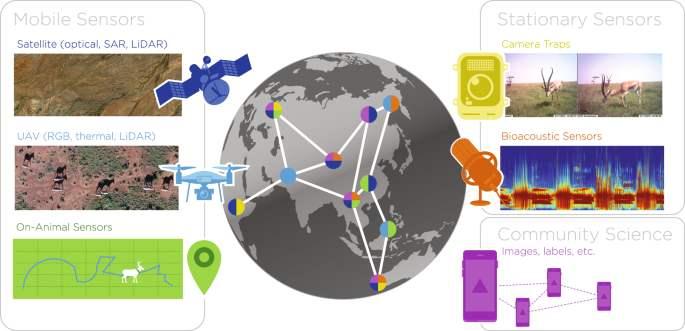
For decades, the Global Biodiversity Program has been collecting data—photos, movement patterns, sound recordings, genetic codes, soil readings, and even underwater footage. Much of this was archived, studied by biologists, and occasionally tapped for education. But the format and volume were never AI-ready. Now, a long-awaited shift is happening.
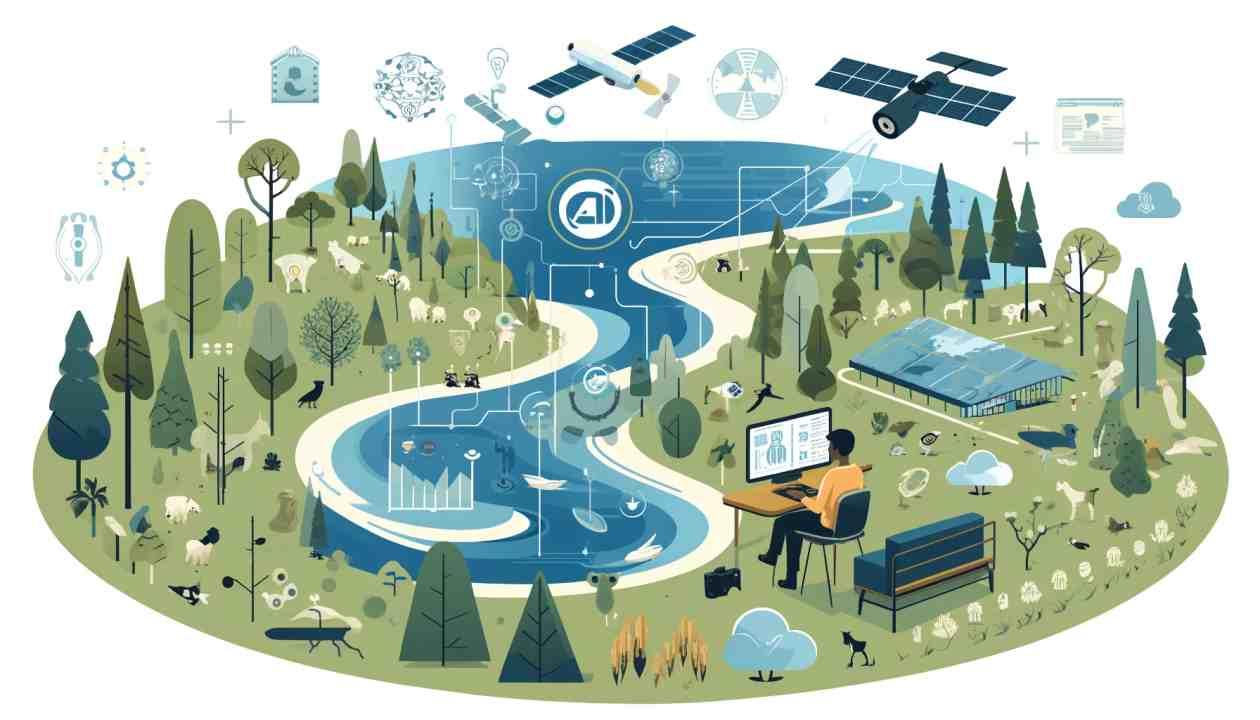
Thousands of field observations have been digitized, cleaned, and annotated—not manually, but through custom-built scrapers and algorithms that understand scientific shorthand and standardize it for training sets. Whether it’s the flight pattern of a barn owl in winter or the chemical signals exchanged by rainforest fungi, this information now feeds directly into models built to learn from behavior, not just human-made content.
AI researchers are now less dependent on user-generated content and synthetic data. Instead, they are building neural networks shaped by how forests respond to stress, how ecosystems bounce back after fires, and how species interact over time. It's teaching machines to think in systems—not lines—and that's a significant departure from how most AI has learned up to this point.
Why Biodiversity Data Hits Differently
Most training datasets used in AI development revolve around predictable content. Faces. Traffic. Languages. Text documents. The limitations there are obvious—it’s a narrow pool shaped by human design. Biodiversity data, on the other hand, comes with noise, surprise, and a level of variety that’s hard to replicate artificially.
For example, an image recognition model trained on wildlife footage must contend with changing light, camouflage, movement blur, and partial occlusion—exactly the conditions most real-world applications must deal with. Unlike stock photos or staged videos, this data isn’t curated for clarity. That forces models to work harder—and smarter.
Then there's the audio side. Bird calls layered over rustling leaves, insect chirps under changing wind speeds, and marine life communicating through sonar-like bursts—each sound clip carries layers of non-human information. Training models on these sounds is already helping to build acoustic recognition systems that can pick up subtle variations in tone, pacing, and rhythm—useful not just in biology but in health, linguistics, and robotics.
Building Models That Understand Context
One of the most overlooked strengths of biodiversity data is context. In natural systems, nothing happens in isolation. A drought affects not just water levels but food chains, migration, and even the reproductive cycles of species miles away. AI models trained on such datasets are beginning to reflect this interdependence.
The models don’t just identify a single image or predict a single outcome—they are being structured to recognize cascading effects. This means better decision-making in sectors like agriculture, where knowing how one variable might influence ten others is more valuable than pinpoint accuracy on one factor.
There's early evidence that these models, shaped by ecological relationships, perform better in environments where variables shift unexpectedly, like autonomous navigation in changing terrains or drone-based analysis in disaster zones. They're learning to be adaptive in the way nature is adaptive: not perfect, but flexible enough to make it work.
A Different Kind of Intelligence
It’s tempting to think of AI as a human-mimicking tool, but the influence of biodiversity is nudging it toward something different—models that don’t just learn from people, but from ecosystems. Already, neural networks trained on migration data are helping optimize supply chain logistics—not by copying business patterns, but by mimicking how birds distribute resources across thousands of miles. Some researchers are using plant signaling data to inspire new communication protocols that work in networks with minimal bandwidth and high interference.
Others are looking to ant colony behavior to refine decentralized problem-solving, allowing AI systems to adapt and respond in real-time with minimal centralized control. There's also interest in how coral reefs handle disruption, leading to models that remain stable despite repeated shocks. These examples highlight a broader shift: instead of building AI that only fits structured environments, developers are beginning to design for chaos, change, and organic flow.
Even decision trees used in prediction software are being adjusted using principles from fungal growth, decentralized yet remarkably efficient in resource allocation. This doesn’t mean machines are becoming more “natural.” But they are becoming better at recognizing non-linear relationships and embracing data that doesn’t follow neat cause-and-effect. That could be a turning point in fields where uncertainty and variability have always been roadblocks.
Final Thoughts
The idea that the most advanced technology today could be shaped by the quiet logic of nature might seem counterintuitive at first. But the results speak for themselves. AI models built on biodiversity data aren't just expanding our technical capabilities—they're forcing us to think differently about what intelligence even means.
Instead of treating nature as something to map or replicate, these efforts treat it as a collaborator. The Global Biodiversity Program may have started with preservation in mind, but in opening its archives to the tech world, it’s become something else entirely: a living database of pattern, strategy, and complexity. And in that complexity, AI is finding a different way to learn—one that isn’t just about speed or scale, but depth.