Generative AI is no longer just a promising idea — it’s becoming a working part of how industries operate. Recently, PTC, Microsoft, and Volkswagen announced a partnership that aims to bring this technology into real-world design and manufacturing. Each of these companies brings a unique strength: PTC’s expertise in product lifecycle and CAD software, Microsoft’s cloud and AI capabilities, and Volkswagen’s global scale as a manufacturer. Together, they want to integrate generative AI into everyday engineering and production workflows, giving teams better tools to create, plan, and innovate more effectively. This signals a clear shift toward applied, practical AI.
Why Are These Companies Working Together?
This collaboration stands out because it combines experience from three very different areas. PTC has a long history of making design and lifecycle management tools for manufacturing and automotive industries. These tools help teams manage everything from early concept sketches to production and maintenance. Microsoft brings Azure’s cloud computing platform and advanced generative AI models, which are trained to understand and produce text, images, and even designs. Volkswagen, one of the world’s largest automakers, provides the massive industrial setting where all these ideas can be tested and refined at scale.
By working together, these companies aim to embed AI where it’s actually needed — inside the tools engineers and planners already rely on. Generative AI models by themselves are powerful but not always easy to use in specific industries. PTC’s software already forms the backbone of many design and manufacturing processes, so adding Microsoft’s AI into that workflow makes it easier for engineers to access its benefits. For Volkswagen, the collaboration allows its teams to apply AI quickly without having to develop everything in-house.
The focus is on making AI practical. Instead of flashy demos or one-off projects, the goal is to improve everyday tasks, such as suggesting smarter designs, detecting flaws earlier, or generating documentation more quickly. For engineers and planners, this means AI becomes an invisible but helpful presence, enabling better decisions and opening up new possibilities they might not have considered otherwise.
How Generative AI Fits Into Industry Workflows?
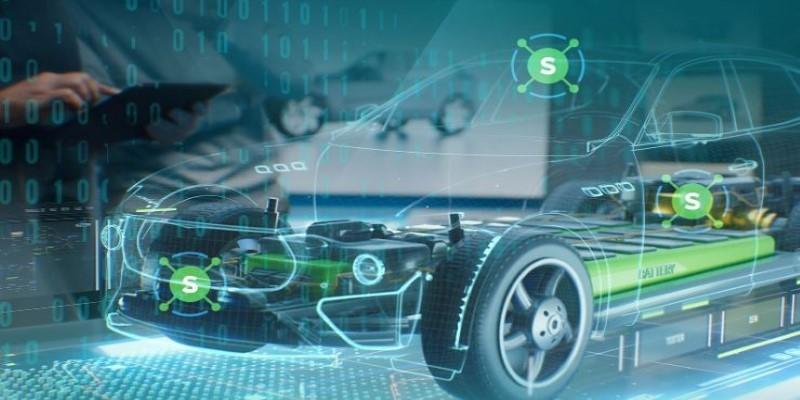
One of the biggest opportunities for generative AI in this partnership is product design. Designing a car involves thousands of decisions — each part must meet strict safety, efficiency, and cost requirements. Generative AI can create alternative designs, simulate how they would perform, and highlight areas for improvement. Instead of starting from scratch, designers can begin with AI-generated options and fine-tune them. This saves time and encourages more creative solutions.

Production planning is another area where AI could make a big difference. Large-scale manufacturing plants like Volkswagen’s are incredibly complex, and any downtime can cost millions. AI can analyze patterns in maintenance logs, supply chain data, and production records to optimize schedules and predict problems before they occur. It can also automatically generate updated work instructions as designs or processes change, keeping everyone on the same page.
The partnership is also exploring how generative AI can improve training. In factories, workers often need to learn new equipment or processes quickly. AI can generate realistic simulations and training materials tailored to specific tasks, helping people get up to speed faster. This reduces the learning curve and improves safety and efficiency on the shop floor.
The Role of Cloud and Data
All of this depends on having the right infrastructure to handle huge amounts of data. Microsoft Azure provides the cloud platform that powers the generative AI tools in this partnership. Volkswagen’s factories and PTC’s design software generate enormous amounts of data every day, and Azure processes that data securely and at scale to train and run the AI models.
Security and privacy remain a major concern, especially for proprietary designs and sensitive production data. Microsoft and PTC have designed the system so that Volkswagen keeps control of its data, even while benefiting from AI insights. Azure’s compliance with global standards reassures companies that their information is handled properly.
The cloud also means that updates can happen quickly and at scale. As Microsoft and PTC improve their AI models, Volkswagen can see the benefits almost immediately, without waiting for local software updates. This flexibility is key for keeping up with fast-changing industrial needs and maintaining a competitive edge.
What This Means for the Future?
The partnership between PTC, Microsoft, and Volkswagen shows how generative AI is moving beyond experiments and into everyday use. The goal is not only to speed up work but to make it smarter by offering suggestions, catching errors early, and giving engineers more creative options.
For Volkswagen, this could lead to shorter design cycles, fewer production issues, and more efficient factories. PTC gains an opportunity to make its software more attractive by adding advanced AI directly into its tools. Microsoft strengthens Azure’s reputation as more than just a cloud service, positioning it as a foundation for applied AI in manufacturing.
This collaboration will likely be watched closely by others. If it succeeds, it could inspire similar moves in industries like aerospace, consumer electronics, and other manufacturing fields, where the benefits of generative AI could also be realized.
Rather than replacing people, generative AI is working alongside them, handling routine tasks, processing data, and presenting choices so humans can focus on what they're best at. Thoughtful integration of AI has real potential to make processes more adaptive and designs more inventive.
Conclusion
The collaboration between PTC, Microsoft, and Volkswagen is more than just another business arrangement. It marks a turning point in how industries can blend human expertise with advanced AI to solve complex challenges. Instead of staying as a theoretical concept, generative AI is beginning to show its value in real factories and design studios. By working together, these companies are building a model for how technology can complement people rather than compete with them. If the project meets its goals, it could set a new standard for how industries approach design, production, and innovation, shaping the future of manufacturing in meaningful ways.